


Have you ever wondered how long your oxygen device will truly last when you’re out and about?
If you rely on oxygen therapy or are searching for a portable oxygen concentrator, you already know that battery life isn’t a minor detail; it’s everything!
Yet many medical oxygen users are still confused by manufacturer claims, technical terms, and real-world performance differences.
In this article, we will break down all the basics and help you understand what affects portable oxygen device battery life, how long you can realistically expect it to last, and how to make the most of your portable oxygen power when you’re on the move.
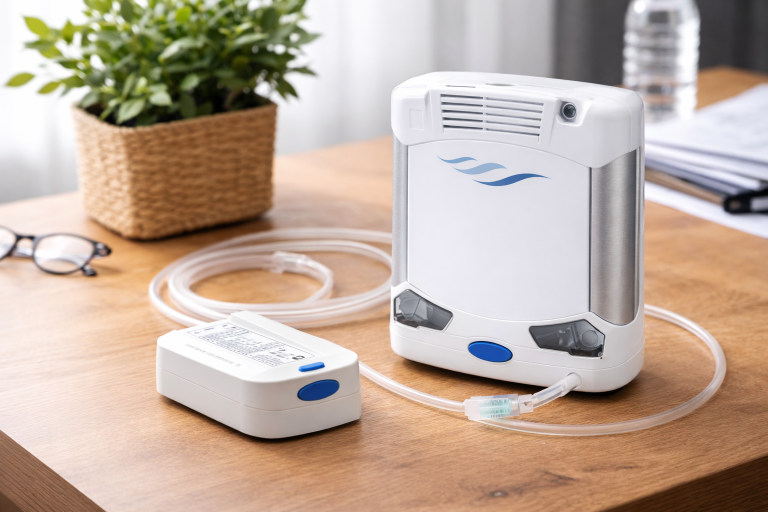
Key Factors That Affect Portable Oxygen Device Battery Life
1. Oxygen Flow Setting
Higher oxygen settings require more energy. Devices using continuous flow generally consume more power than those using pulse-dose delivery.
Pulse-dose systems release oxygen only when you inhale, which helps conserve portable oxygen power and extend battery life.
2. Breathing Rate and Activity Level
If you’re walking, climbing stairs, or moving quickly, you’ll breathe faster. This increases oxygen delivery and drains the oxygen concentrator battery more quickly.
At rest, battery life may be much longer than during active movement, especially during portable oxygen travel.
3. Device Size and Oxygen Device Portability
Smaller, ultra-compact devices are excellent for oxygen device portability, but they often have smaller batteries. Larger portable units may last longer but sacrifice convenience and ease of transport. If you are a frequent traveller, you have to find the right balance between size and battery capacity.
4. Battery Age and Condition
Like all rechargeable batteries, oxygen device batteries degrade over time. After 12–24 months of regular use, you may notice:
- Shorter run times
- Slower charging
- Faster power loss
This is normal battery wear. Dont mistake it for device failure!
5. Environmental Conditions
Extreme temperatures, especially heat, can reduce battery efficiency. Cold weather can also shorten run time. Most manufacturers recommend using and storing batteries at room temperature to protect portable oxygen device battery performance.
Comparison Between Portable Oxygen Device Battery Life
| Model | Battery Details |
| Inogen Rove 6 | Single Battery: Lasts up to 6 hrs 25 min Double Battery: Lasts up to 12 hrs 45 min |
| AirSep FreeStyle Comfort | 8-Cell Battery: Lasts up to 8 hrs 16-Cell Battery: Lasts up to 16 hrs |
| SeQual Eclipse 5 | 2 LPM Continuous Flow: 2 hrs Pulse Dose setting of 2 setting: 5.2 hrs |
| GCE Zen-O | With 2 Batteries at 18 BPM: up to 9 hours 40mins |
Note: Actual battery duration may vary depending on oxygen flow setting, breathing rate, activity level, battery age, temperature, and overall device usage.
Portable oxygen device battery is one differentiating factor between these models, but if you want a more detailed comparison you can read our guide on comparing oxygen concentrators before you buy!
Battery Life and Air Travel: What You Need to Know
For flights, airlines require passengers to carry enough battery power to last 150% of the total flight time, including layovers. That means if your flight is 6 hours, you should carry at least 9 hours of battery life.
Continuous Flow vs Pulse Dose: Battery Impact
Pulse Dose Systems
- Longer battery life
- Better for travel and mobility
- More efficient oxygen delivery
Continuous Flow Systems
- Higher power consumption
- Shorter battery duration
- Often heavier and less portable
Many travel-friendly devices today rely on pulse-dose technology to improve oxygen machine battery use efficiency.
How to Extend Your Portable Oxygen Device Battery Life
Here are practical ways to make your battery last longer:
- Carry spare or extended batteries
- Avoid unnecessary high settings
- Turn the device off when not in use
- Store batteries properly when not in use
These simple steps can significantly improve portable oxygen power performance.
When Is It Time to Replace Your Oxygen Concentrator Battery?
You should consider replacing your oxygen concentrator battery if:
- Battery life drops significantly below its original capacity
- The device shuts off unexpectedly
- Charging takes much longer than usual
- It is visibly damaged or overheats frequently
Why Battery Knowledge Improves Safety and Independence
Understanding your portable oxygen device battery helps you:
- Plan trips confidently
- Avoid sudden power loss
- Stay compliant with airline rules
- Maintain continuous oxygen therapy
If you have chronic respiratory conditions, it’s even more important for you to understand your battery performance so that you can prepare well beforehand and avoid any mishaps.
Conclusion
So, how long will your portable oxygen device battery really last? The answer depends on the model of your POC, how you use it, and how well you manage your battery.
For a more detailed comparison between the top portable oxygen concentrator models, you can read our previous blog!
If you have any questions or concerns, please don’t hesitate to contact us.
We at Travelling with Oxygen take great pride in serving our customers worldwide and are here to help you travel with confidence and ease!