

Travelling should be an enjoyable experience, not something that becomes complicated because of your oxygen requirements. Whether you are planning a family holiday, an international flight, a road trip or a cruise, having the right oxygen equipment can make a significant difference to your comfort and confidence.
Choosing a Portable Oxygen Concentrator is an important decision for anyone who needs supplemental oxygen while travelling. However, with different models, oxygen delivery settings, battery capacities and equipment sizes available, knowing which one is right for your needs can be challenging.
The best choice is not necessarily the smallest or most expensive machine. It is the one that matches your prescribed oxygen requirements, travel plans and everyday lifestyle.
Here are the most important factors to consider before choosing your equipment.
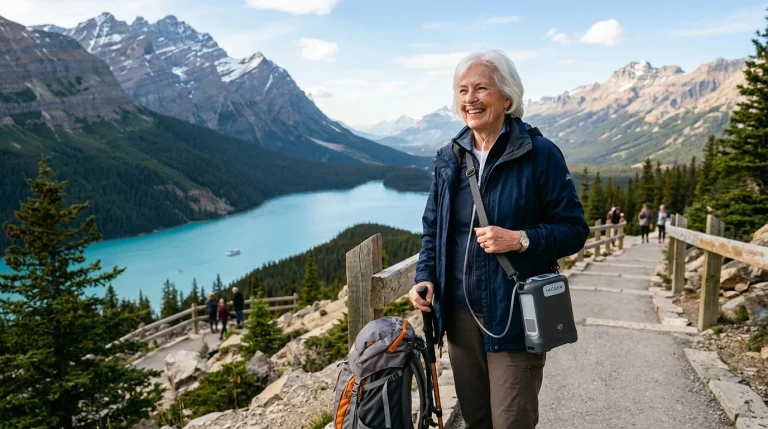
Before comparing different oxygen concentrators, speak with your healthcare professional about your oxygen prescription and travel requirements.
Portable oxygen concentrators generally provide oxygen through either pulse-dose delivery or continuous-flow delivery.
Pulse-dose devices release oxygen when they detect an inhalation, while continuous-flow machines deliver oxygen at a consistent rate. Not every portable model offers both options, and pulse-dose settings are not directly equivalent to continuous-flow litres per minute.
This distinction is particularly important if you require oxygen during sleep, physical activity or extended periods of travel.
Your prescribed oxygen needs should always determine which machines are suitable. Never change your oxygen settings simply because another model offers a different setting or appears more convenient.
One of the main advantages of a portable oxygen concentrator is the freedom to move around without relying on heavy equipment.
If you enjoy sightseeing, shopping, visiting family or exploring new destinations, carrying a lightweight machine can make travelling more manageable.
When comparing models, consider:
Overall machine weight.
Whether it comes with a comfortable carrying bag.
Shoulder strap or trolley options.
Ease of handling when walking through airports.
Whether it is convenient to store in a vehicle or accommodation.
The best portable oxygen concentrator for someone taking short walks around a hotel may be different from the best option for someone planning full days of sightseeing.
Think about how you will actually use the machine throughout your holiday rather than choosing based on specifications alone.
Battery performance is one of the most important essentials for travelling with oxygen concentrators. A machine might offer excellent portability, but limited battery life could make longer journeys difficult. Before selecting a device, find out:
How long the battery lasts at your prescribed setting.
Whether additional batteries are available.
How long the batteries take to recharge.
Whether the machine can operate using an appropriate mains power supply.
Whether spare batteries meet airline requirements.
Remember that advertised battery life can vary depending on the oxygen setting, breathing rate, battery condition and operating environment. For international flights, you should also consider possible delays and connecting journeys. Having sufficient spare battery capacity can provide additional reassurance.
The US Department of Transportation explains that airlines may require passengers using portable oxygen concentrators to carry batteries sufficient for at least 150% of the planned flight duration.
Read the US Department of Transportation’s portable oxygen guidance before travelling.
Not every portable oxygen concentrator is automatically suitable for use onboard an aircraft. If you are planning to travel by air, check whether the model meets the applicable aviation requirements and whether your airline accepts it.
A suitable portable oxygen concentrator for flying should meet the relevant aircraft acceptance criteria. For US-regulated operations, the FAA requires qualifying devices to meet specific technical criteria and carry the required manufacturer’s conformity label where applicable. You should also check the airline’s individual medical equipment policy before purchasing or hiring a machine.
Some airlines require advance notification, medical documentation and confirmation of battery capacity. Others have specific procedures for checking equipment before departure.
Useful guidance is available from the Federal Aviation Administration.
Your oxygen requirements do not end when you leave the airport.
Consider what type of holiday you are planning and how you intend to use your equipment. For example, a road trip may involve several hours in a vehicle, regular stops and overnight accommodation. A city break may involve walking between attractions, restaurants and hotels.
Cruises can require a slightly different approach. For Cruising With Oxygen, some travellers may need a stationary oxygen concentrator in their cabin for extended or overnight use, alongside a portable option for moving around the ship. It is important to distinguish between the two types of equipment.
A portable oxygen concentrator is designed to support mobility, whereas a stationary oxygen concentrator is heavier and intended for use in a fixed location, such as a bedroom or hotel room.
If you are planning a cruise, read our guide to Cruising with Oxygen: A Complete Guide to understand how to organise oxygen equipment before departure.
A concentrator should be straightforward to use, especially when you are away from home. Look for a machine with clear controls, an easy-to-read display and simple battery replacement.
Noise is another factor worth considering. If you plan to use your equipment in hotel rooms, restaurants or other shared environments, a quieter model may make your experience more comfortable.
Ask about alarm systems, maintenance requirements and what to do if the machine displays a warning. If possible, familiarise yourself with the equipment before your departure rather than learning how to operate it during your holiday.
Choosing an oxygen concentrator is not simply about buying a machine. You should also consider what happens if you need assistance while travelling.
Look for a supplier that can explain the equipment, provide operating guidance and advise on suitable accessories and replacement batteries. For international travel, check whether support is available when you are away from home and what arrangements can be made if your equipment develops a fault.
This is particularly important for longer holidays and cruise journeys, where replacing specialist equipment at short notice may be difficult.
Your travel arrangements will help determine which type of equipment is appropriate.
Portable oxygen concentrators are designed for mobility and can be useful for flights, sightseeing and everyday activities.
Stationary machines are designed for fixed-location use and may be suitable for travellers who require oxygen support in their hotel or holiday accommodation.
Some travellers may need both types of equipment to meet different requirements throughout their trip.
Finding the right Portable Oxygen Concentrator starts with understanding your medical requirements and considering how you intend to travel. Battery performance, weight, oxygen delivery settings, airline compatibility and ongoing support should all influence your decision.
Whether you are planning a short flight, a European road trip or a cruise holiday, taking time to compare suitable equipment can help make the experience more manageable. At Travelling With Oxygen, we help travellers explore suitable oxygen equipment for their journeys, including portable and stationary concentrators for different travel arrangements.
Planning your next holiday? Contact our team to discuss your oxygen equipment requirements and find an option that supports your travel plans.
Please complete our oxygen booking form.
Don’t worry if you don’t have all the details yet, we can complete any missing items when we give you a call.
We will call you to discuss your medical condition and current oxygen requirements as well as answer any questions you may have.