


If you consistently use portable oxygen concentrators and the first thing that comes to your mind when you think of travel is not freedom, independence and enjoyment, you most likely believe in oxygen travel myths that are restrictive and prevent you from experiencing the true joy of exploring the world.
It’s 2025 (almost 2026!) and if you’re still avoiding travel just because you use travel oxygen machines, you need to know that the oxygen travel myths you believe in have no real basis, at least none that are relevant today.
Here are the top 10 oxygen travel myths that are not true today.
Myth 1: People Who Need Oxygen Should Not Travel
Truth: Oxygen therapy does not prevent travel, instead, it supports it.
One of the most damaging travel oxygen concentrator myths is the belief that needing oxygen means you must stay home. In reality, oxygen therapy is designed to help people live fuller, more active lives. With the availability of portable oxygen concentrators, you can safely travel for leisure, work, family visits, or medical reasons.
This is also recommended by medical professionals who encourage travel as long as your oxygen needs are properly managed and this is easy to achieve with a good quality oxygen concentrator, using which you can travel both domestically and internationally without facing a drop in your oxygen levels or having to deal with fatigue, breathlessness or any such complications.
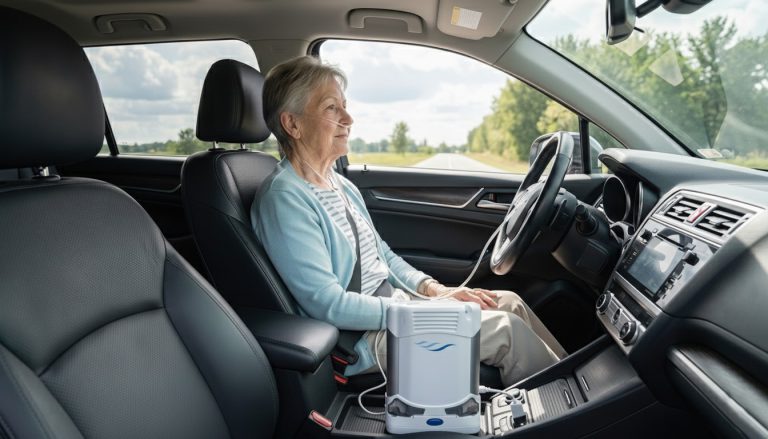
Myth 2: Travel Oxygen Machines Are Large, Heavy, and Difficult to Carry
Truth: Modern travel oxygen machines are lightweight and portable.
This myth is generally based on outdated oxygen equipment which used to be heavy and difficult to carry. Yes, it’s completely true that in the past, oxygen cylinders were heavy and restrictive but is this relevant to us today? Absolutely not.
Modern portable oxygen concentrators are compact, and designed specifically for mobility. Most of them weigh just a few kilograms and you can easily wear them with the help of shoulder straps or backpacks.
Many travelling oxygen concentrators are also built keeping in mind specific travel requirements which means that they can also fit under airline seats and this makes them ideal for long flights. User-friendly controls also allow people of all ages to operate them with minimal effort, so it doesn’t matter how old or young you are you can easily operate it.
Myth 3: Airlines Do Not Allow Oxygen Devices on Board
Truth: Most airlines allow approved oxygen devices with advance notice.
Many people believe airline travel with oxygen is not allowed, but this is incorrect.
Most commercial airlines in the US for example permit passengers to bring a FAA approved oxygen concentrator on board. These devices meet strict safety standards and are approved for use during all phases of flight.
Passengers are usually required to:
- Inform the airline in advance
- Carry enough battery power for the full journey
- Provide medical documentation if asked
Myth 4: Oxygen Concentrators Are Unsafe During Flights
Truth: Oxygen concentrators are safe and approved for air travel.
A common myth about oxygen concentrator use is that these devices pose a safety risk on airplanes. But that’s far from the truth. This is because oxygen concentrators do not store oxygen like tanks. Instead, an oxygen concentrator generator pulls in surrounding air and filters out nitrogen, delivering concentrated oxygen to the user.
Because they do not contain pressurized oxygen, concentrators are considered safe and are permitted by aviation authorities. When used according to guidelines, they don’t pose significant fire or explosion risk during flights.
However, there are some rules and regulations that have been designed to ensure proper safety and you need to keep these in mind when you’re travelling and these differ from country to country. So whenever you’re flying you should review the guidelines issued by your state and airline.
Myth 5: Portable Oxygen Concentrators Are Only for Severe Medical Conditions
Truth: Oxygen therapy supports many health and wellness needs.
Another one of the most common travel oxygen concentrator myths is that portable oxygen concentrators are only used by people with advanced lung disease. While they are crucial for chronic respiratory conditions, they are also used by individuals recovering from illness, older adults, people with altitude sensitivity, and those who experience oxygen drops during sleep or exertion.
Overall, using oxygen while travelling also helps prevent fatigue, dizziness, headaches, and shortness of breath, allowing travelers to fully enjoy their journey.
Myth 6: Travelling Oxygen Concentrators Limit Independence
Truth: They actually increase your freedom and mobility.
Are you someone who still believes that using travelling oxygen concentrators makes movement difficult or draws unwanted attention? Well, there’s some good news for you because this myth too is a myth after all! It is not grounded in reality.
Modern portable oxygen concentrators are quiet and designed to support your independence. As an oxygen user you can walk through airports, move between terminals, attend meetings, explore destinations, and participate in activities without constantly worrying about breathlessness. So, rather than limiting travel, oxygen concentrators restore your confidence and energy, making travel safer and more enjoyable.
Myth 7: Oxygen Needs Are the Same at Ground Level and in the Air
Truth: Oxygen requirements may increase during flights.
Aircraft cabins are pressurized, but not to sea-level oxygen concentration. What this means is that blood oxygen levels can drop slightly during flight, especially for individuals with respiratory conditions. Differences in altitude are an important point to keep in mind at all times and also why oxygen therapy is often recommended to those travelling to high altitude regions even if they don’t use oxygen regularly on the ground.
If you have any concerns or doubts about your flow rate, and if it is needed or not, you can speak to your doctor and they will guide you on the necessary safety measures that you should take.
Myth 8: Oxygen Concentrators Are Loud and Disruptive
Truth: Modern devices operate quietly.
Many people worry that travel oxygen machines will disturb fellow passengers. Today’s models are designed to be extremely quiet, producing minimal noise which can even be compared to soft background airflow. This makes them suitable for use in airplanes, hotels, public transport, and shared spaces. Their discreet design ensures comfort for both the user and people who are present in the surroundings.
Myth 9: Planning Oxygen Travel Is Too Complicated
Truth: With preparation, it is simple and predictable.
While travelling with oxygen does require planning, it is far from being complicated. Key steps include:
- Choosing a FAA approved oxygen concentrator
- Carrying extra batteries
- Informing airlines in advance
- Following medical guidance & carrying any necessary medical documentation
As long as you follow the necessary steps and are educated about the process of using and travelling with concentrators, oxygen travel will become routine practice for you and you won’t need to think twice before booking a trip. Usually the intimidation goes away after the first trip. So let this be a sign asking you to just take the first step!
Myth 10: Oxygen Users Cannot Travel Internationally
Truth: International travel with oxygen is possible.
Another widespread myth about oxygen concentrators is that it is too complex to manage international travel with it. In reality, many portable oxygen concentrators are fully compatible with global power standards and airline regulations. There are some minor complexities involved in advance planning and proper documentation but as an oxygen user you can still easily travel the world. This is not just limited to air travel. You can also easily plan a cruise, explore high altitude regions and do a lot more!
Conclusion
So, airline travel with oxygen doesn’t look so overwhelming after all now or does it? All you need to know are the basic rules and regulations and you will be good to go!
If you still have any concerns, questions or queries, feel free to reach out to us because we at Travelling with Oxygen are here to make sure you can travel the world with freedom and confidence and are not restricted by myths but empowered by rules that will protect your safety as well as the safety of others!