


Worried about flying with oxygen? You’re not alone.
Many travelers wonder how air travel works when oxygen support is involved, especially with airline rules, medical requirements, and equipment guidelines to think about.
However, the good news is that flying with oxygen is far more manageable today than it used to be.
With proper planning, the right equipment, and a clear understanding of airline policies, you can travel comfortably and confidently.
In this guide, we’ll cover everything you need to know about flying with oxygen, along with some practical travel tips for oxygen users.
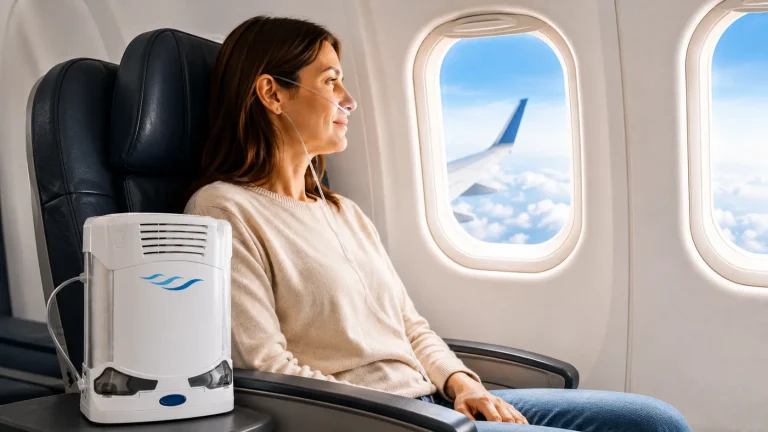
Understanding Airline Rules for Oxygen Travelers
Every airline has its own policies regarding oxygen equipment, which is why preparation is so important before booking your flight.
Most airlines allow passengers to travel with portable oxygen concentrators (POCs), but they generally require the device to meet certain standards.
For example, if you are flying from the US, you need to have an FAA-approved POC.
Moreover, some airlines ask for:
- Medical clearance forms
- Physician statements
- Device specifications
- Confirmation of battery duration
Checking these requirements early will help you avoid last-minute stress at the airport!
Why Portable Oxygen Concentrators Make Flying Easier
Modern portable oxygen concentrators have significantly improved the travel experience for oxygen users.
Older oxygen systems were often bulky and difficult to transport, whereas today’s POCs are designed specifically for mobility.
The biggest benefits of flying with oxygen concentrators include:
- Lightweight designs
- Easier movement through airports
- Battery-powered operation
- Continuous or pulse flow options
- Reduced dependence on oxygen refills
These features will help you move more freely while maintaining oxygen support throughout the journey.
Preparing for Your Flight in Advance
The rule here is simple: the earlier you begin planning, the smoother the process will be!
Here are a few things to keep in mind:
Confirm Airline Policies:
Review your airline’s oxygen guidelines carefully before booking.
Notify the Airline Early:
Many airlines recommend notifying them at least 48 hours before departure if you’ll be traveling with oxygen equipment.
Carry Important Documents:
Keep the following easily accessible:
- Medical prescriptions
- Physician letters
- Device approval information
- Emergency contact details
Managing Battery Life During Flights
Battery planning is one of the most overlooked but important aspects of oxygen therapy during flights.
Most airlines require passengers to carry enough battery power to cover:
- Flight duration
- Layovers
- Delays
- Unexpected disruptions
It’s also generally recommended to carry extra fully charged batteries in your carry-on luggage.
Additionally, you should be mindful of the following:
- Keep batteries within easy reach
- Store batteries safely and securely
- Avoid exposing batteries to extreme temperatures
You can learn more about your device’s battery life here!
Airport Navigation Tips for Oxygen Users
Large airports can feel overwhelming, especially when traveling with medical equipment.
But once again, a little preparation goes a long way.
So, make sure to:
- Arrive early
- Request assistance if needed
- Keep equipment accessible
Moreover, security screening is often a major concern for first-time travelers flying with oxygen.
If you are one of these people and want to make the process easier:
- Inform security staff in advance that you’re traveling with medical equipment
- Keep device documentation accessible
- Reach before time to avoid any delays
The process is quite straightforward, so you don’t need to stress too much about it!
Just follow these simple travel tips for oxygen user and you can make airport navigation much less stressful.
Staying Comfortable During the Flight
Long flights can become physically draining, especially when you are managing oxygen needs, but if you prioritize your comfort, you can make the experience far more enjoyable.
Here are a few things to do:
Choose Comfortable Seating:
Whenever possible, select seats with enough space to manage your equipment comfortably.
Stay Hydrated:
Cabin air is often dry, so drinking water regularly helps maintain comfort.
Avoid Overexertion:
Move carefully through the airport and conserve energy where possible. Maintaining stable oxygen use and energy levels can help prevent fatigue during travel.
Oxygen Therapy During Flights and Cabin Pressure
Airplane cabins are pressurized, but oxygen levels can still differ from those at ground level. This is why oxygen therapy during flights requires careful planning.
Some travelers may need different oxygen settings while flying, depending on their condition and physician recommendations.
Therefore, it is always a good idea to discuss your travel plans with your healthcare provider beforehand to ensure your oxygen needs are properly managed throughout the trip.
Packing Essentials for Flying with Oxygen
Essential items to carry along with your POC:
- Extra batteries
- Chargers and power adapters
- Medical documentation
- Cannulas and tubing (as needed)
- Device manuals
You can visit our detailed guide on packing essentials if you are stressed about packing for your trip and need some extra help!
FAQ Section
Can you fly with oxygen concentrators on commercial airlines?
Yes, most commercial airlines allow portable oxygen concentrators onboard as long as the device is approved and airline requirements are followed.
What are FAA-approved oxygen concentrators?
FAA-approved oxygen concentrators are portable oxygen devices that meet US aviation safety standards for in-flight use.
What are the best travel tips for oxygen users?
Planning, carrying extra batteries, keeping documents accessible, arriving early, and understanding airline policies are some of the most important tips for stress-free travel.
Conclusion
Flying with oxygen may seem complicated at first, but with proper preparation, a solid understanding of airline rules, and a high-quality FAA-approved oxygen concentrator, you will enjoy your trip with peace of mind!
Here are some of the best portable oxygen concentrators for flying, you can check out for your next trip!
If you have any questions, please feel free to reach out to us. As a trusted UK-based provider of portable oxygen concentrators, we at Travelling with Oxygen are here to help you travel with confidence while fulfilling all your oxygen needs!