


Planning a flight with oxygen for the first time can feel overwhelming. Between airline policies, medical forms, battery requirements, and equipment guidelines, it’s natural to feel unsure about where to even begin.
The good news? Booking air travel with oxygen support is much easier when you understand the process step by step.
Whether you are traveling with a portable oxygen concentrator (POC), managing COPD, or flying with pulmonary hypertension, proper preparation can help you avoid unnecessary stress and travel more confidently.
In this guide, we’ll walk you through everything you need to know about booking a flight if you are on oxygen support!
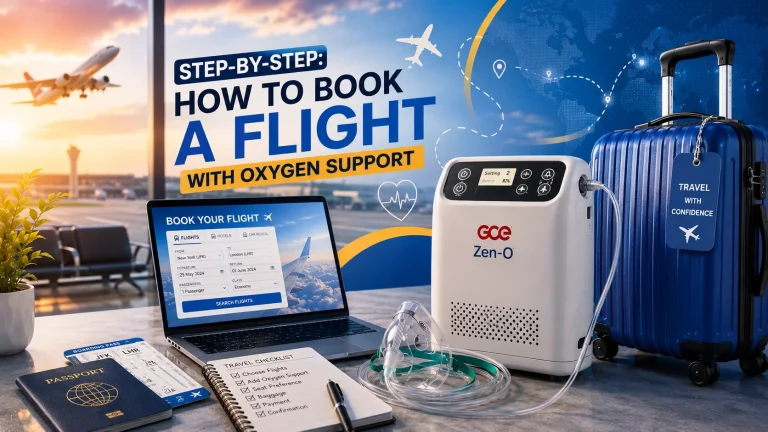
Step 1: Speak with Your Healthcare Provider
Before booking your trip, schedule a discussion with your healthcare provider. This is one of the most important parts of planning a flight with oxygen support.
Air travel affects oxygen levels because airplane cabins are pressurized differently than ground environments. Therefore, you may require adjustments to your oxygen settings during flights.
This step is especially important for people:
- Flying with COPD
- Flying with pulmonary hypertension
- Recovering from respiratory illnesses
- Using oxygen therapy regularly
Your healthcare provider may recommend:
- Oxygen flow adjustments
- Additional testing before travel
- Documentation for the airline
Step 2: Contact the Airline Directly (Don't Just Book Online)
Once you have medical clearance, call the airline’s medical desk or special assistance line rather than relying on the standard booking website.
Explain upfront that you require supplemental oxygen during your flight.
Key questions to ask include what medical documentation they need and how far in advance you must notify them. Most airlines recommend notification at least 48 hours before departure.
Step 3: Understand Oxygen Concentrator Airline Rules
Every airline has different policies regarding oxygen equipment, so reviewing them carefully before purchasing your ticket is essential.
Most airlines allow passengers to travel with a portable oxygen concentrator, but the device must meet aviation safety standards.
Common oxygen concentrator airline rules require using an approved device, carrying sufficient battery power, completing any medical forms requested, and keeping the device accessible throughout the flight.
Step 4: Choose an FAA-Approved Oxygen Concentrator (If you are flying from the US)
Airlines typically require travelers to use an FAA-approved oxygen concentrator during flights.
FAA approval means the device meets aviation safety standards and is considered safe for use onboard aircraft.
When choosing a POC for flying, consider:
- Weight and portability
- Battery life
- Pulse flow or continuous flow options
- Ease of carrying through airports
Modern portable oxygen concentrators are designed specifically for mobility, making travel significantly easier than older oxygen systems.
Step 5: Plan Battery Life Carefully
Most airlines require enough battery life to cover at least 150% of the total flight time.
Helpful Battery Tips
- Charge all batteries before leaving home
- Keep batteries protected during travel
- Store them in easily accessible locations
- Avoid exposing batteries to extreme heat or cold
Step 6: Select Flights That Reduce Stress
The type of flight you book can make a big difference in your travel experience.
Whenever possible, consider:
- Direct flights instead of multiple layovers
- Longer connection times if layovers are necessary
- Convenient departure times
- Airports with accessibility support
Step 7: Arrive Early at the Airport
Traveling with medical equipment usually takes additional time, especially during security screening and check-in.
Arriving early gives you time to:
- Handle security checks calmly
- Speak with airline staff if needed
- Organize equipment before boarding
- Avoid unnecessary stress
Large airports can feel overwhelming, but preparation makes the process much easier.
Step 8: Understand Security Screening Procedures
Security checks are often one of the biggest concerns for first-time oxygen travelers. Fortunately, portable oxygen concentrators are generally allowed through airport security.
To make screening easier:
- Inform security staff that you’re carrying medical equipment
- Keep device paperwork accessible
- Allow extra time if inspection is needed
Step 9: Communicate with Cabin Crew Upon Boarding
Once onboard, introduce yourself to the cabin crew and let them know you are using supplemental oxygen, where your equipment is stored, and any relevant instructions in case of an emergency.
This simple step ensures the crew can assist you efficiently if needed and helps the flight go as smoothly as possible.
Step 10: Stay Comfortable During the Flight
Long flights can become physically draining, especially for travelers managing respiratory conditions. Prioritizing comfort can make a major difference.
Choose Comfortable Seating:
Select seating with enough space to manage your equipment comfortably whenever possible.Stay Hydrated:
Cabin air is often dry, so drinking water regularly can improve comfort.Conserve Energy:
Move carefully through airports and avoid unnecessary overexertion. Managing energy levels properly helps reduce fatigue during air travel.
Can People with COPD Fly on a Plane?
A common concern many travelers have is: Can people with COPD fly on a plane?
In many cases, yes. Many people with COPD travel successfully every day using oxygen support and proper preparation.
However, because cabin oxygen levels differ from ground-level conditions, some individuals may need supplemental oxygen during flights even if they don’t use it regularly at home.
This is why consulting a healthcare provider before travel is so important when flying with COPD.
Flying with Pulmonary Hypertension
Travelers flying with pulmonary hypertension should also take extra precautions before air travel.
Helpful steps include:
- Discussing travel plans with your doctor
- Carrying all medications in carry-on luggage
- Monitoring oxygen requirements carefully
- Avoiding physical overexertion during travel
With proper planning, many individuals with pulmonary hypertension can still travel comfortably and safely.
Conclusion
Booking a flight with oxygen may seem stressful at first, but the process becomes much more manageable when broken down step by step.
By understanding oxygen concentrator airline rules, choosing an FAA-approved oxygen concentrator, and preparing properly before travel, you can significantly reduce stress and travel with greater confidence.
Make sure to check out our previous guide on airline rules for travelling with a POC.
If you have any questions or concerns, please don’t hesitate to contact us.
We at Travelling with Oxygen take great pride in serving our customers worldwide and are here to help you travel with confidence and ease!
Pingback: Arrange the Right Oxygen Concentrator for Your Trip